
Zero Waste Dish Soap for a Better Kitchen

A kitchen sink is a small place to make a lasting change.
Think about how many plastic bottles of dish soap have made their way through your kitchen over the years. One gets low, another takes its place, and before long, that bottle is simply part of the background.
We wanted to rethink that.
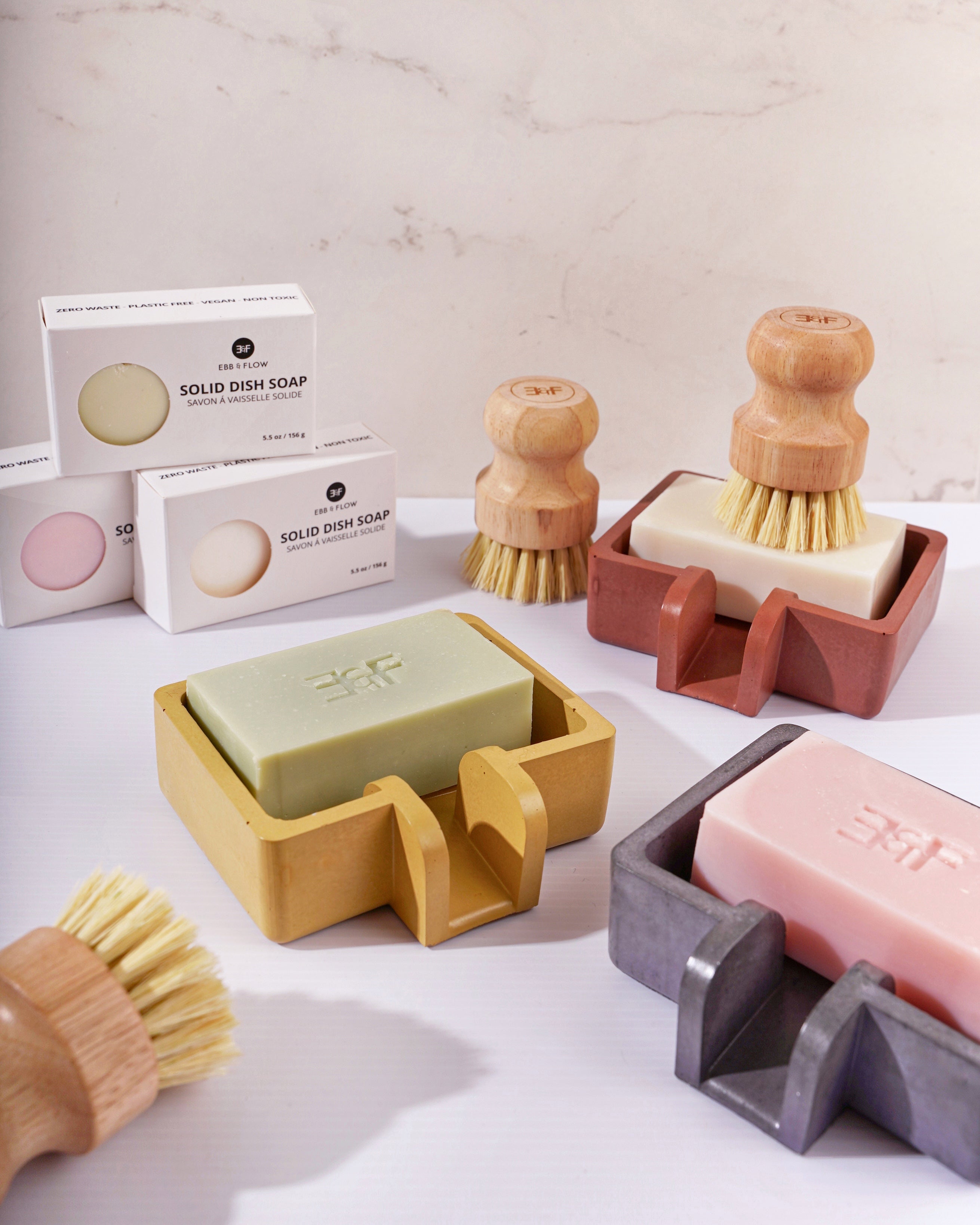
Solid dish soap is a simple alternative to the traditional bottle of liquid soap. It is concentrated, easy to use, and doesn't need a plastic bottle to live on your counter. Add a good dish brush and somewhere for the bar to properly drain, and that's really all there is to it.
No complicated system. No need to overhaul your entire kitchen. Just one everyday swap that makes a little less waste part of the way you already live.
What is zero waste dish soap?
Zero waste dish soap is a solid dishwashing bar designed to replace the conventional liquid soap bottle. Instead of pumping a pre-diluted formula into your sink, you wet a dish brush, sponge, or cloth and work it directly over the bar to create the lather you need.
And while we use the term “zero waste,” it's worth being realistic about what that means. No product has zero environmental impact. Ingredients still need to be grown, made and transported, and packaging may still be necessary.
For us, the appeal is much simpler: less unnecessary packaging moving through your home.
A solid bar eliminates the plastic bottle and concentrates the product into a compact format. You're not paying to ship a bottle that is mostly water, and a good bar can go a surprisingly long way when it's stored properly.
If you're ready to make the switch, you can find our solid dish soap bars alongside our custom fitting concrete Everyday Soap Dish everyday soap dish. designed to let the water drain away between uses. Or grab both together in our starter bundle.
Why we think the sink deserves better
We're big believers that the more sustainable choice shouldn't have to be the less beautiful one.
Your dish soap sits beside your sink every day. So why shouldn't it be something you actually like looking at?
A solid bar has a certain simplicity to it. It sits in a little dish instead of taking up space in a plastic bottle. Pair it with a wood-handled brush or a well-loved cloth and suddenly one of the hardest-working corners of the kitchen feels a little more pulled together.
But the good looks aren't the reason to make the switch.
It's the fact that the bar works.
You wet your brush, run it over the soap, and get to work. If you need more, you add more. When you're finished, the bar goes back on its dish to dry.
That's it.
We don't think washing dishes needs to become a special ritual. It's still washing dishes. But there is something satisfying about replacing a disposable bottle with a simple object that works well and can sit right out in the open.
How to use a solid dish soap bar
If you've always used liquid dish soap, the first few washes might feel a little different. Once you get the hang of it, though, it becomes second nature.
Start by wetting your dish brush, scrubber, sponge, or cloth. Rub it over the surface of the bar a few times until you have enough lather to get started.
Then wash your dishes as usual.
For everyday dishes, you may only need to reload your brush once or twice. For greasy cookware or a particularly ambitious stack of dishes, simply go back to the bar when you need more soap.
For baked-on food, let the pan soak in warm water first. Once the food has softened, use a fresh layer of lather and a brush with enough texture to do the job.
You can also make soapy water in a basin if that's how you prefer to wash a larger load. Work the bar into a wet brush or cloth, swish it through warm water and adjust the amount of soap as you go.
The goal isn't a mountain of bubbles. It's enough soap to lift grease and food, followed by a good rinse.
The trick to making your bar last
There's one thing that will make a bigger difference to the life of your dish soap bar than anything else:
Keep it dry.
This is where a good soap dish really earns its place.
A bar sitting in a puddle of water will soften much faster than one that's able to drain and dry between uses. Keep it out of the direct stream of the tap and give the water somewhere to escape.
We designed our concrete Everyday Soap Dish specifically for this reason. It keeps the bar elevated and allows water to drain away, while looking right at home beside the sink.
A few other little habits help, too. Don't leave a wet sponge sitting on top of the bar, and give your brush a quick shake after you've loaded it with soap.
They're tiny things, but they add up.
And there's something nice about knowing that the little bar on your counter is going to last longer simply because you gave it the right place to live.
What should you look for in zero waste dish soap?
Not every solid soap bar is made for washing dishes.
A body soap might look similar, but it isn't necessarily formulated to cut through grease and food residue. When choosing a zero waste dish soap, look for one specifically made for dishes, with clear ingredient information and a formula designed for everyday kitchen use.
Think about how you actually wash dishes, too.
If you have a dishwasher and only hand-wash a few things each day, a smaller bar and brush might be all you need. If you're constantly washing pots and pans or cooking for a full house, you'll want a bar that can keep up.
Your water can make a difference as well. Hard water can sometimes make soap feel less bubbly and leave mineral spots on glassware. That doesn't automatically mean your dish soap isn't working. Try using warmer water, rinsing well and drying glasses promptly.
And then there's scent.
Some people love a fresh scent while they're cleaning. Others would rather their dish soap disappear into the background, especially in a small kitchen or when there's already a candle burning nearby.
For us, either makes sense. The important thing is that the scent feels good in your home without competing with the food you're cooking or the other scents around you.
Finally, look beyond the bar itself. Consider how it's packaged, what materials are being used and whether the product is designed to last.
Because choosing a lower-waste product isn't about finding something with a perfect sustainability score. It's about making better choices where you can, and continuing to make them.
You don't have to change everything at once
This is probably our favourite part of making a switch like this.
You don't have to become a zero-waste household overnight.
Use the dish soap you already have. Finish the bottle. Then, when it's empty, try a solid bar.
Give yourself a little time to get used to it. Find the brush you like. Figure out how much soap you need. Give the bar a proper place to dry.
That's how changes tend to stick.
We're much more interested in realistic swaps that become part of everyday life than a list of rules that makes you feel like you're doing sustainability wrong.
And if a product is beautiful, useful and easy to live with? Even better.
Start at the sink
There are plenty of bigger sustainability decisions we can make, but sometimes the small ones are the ones that actually become habits.
A solid dish soap bar is one of those.
It's a plastic bottle you don't have to replace. A concentrated product that doesn't need to be diluted before it reaches your kitchen. A simple bar that can sit on the counter instead of being tucked away under the sink.
And maybe that's what we love most about it.
It doesn't ask you to change the way you live. It just asks you to make one slightly different choice the next time you run out of dish soap.
At Ebb & Flow, that's what we mean by beautiful alternatives to disposable living. We want the things you use every day to be useful, beautiful and made with a little more thought, without asking you to settle for less.
Sometimes a better choice really can start at the kitchen sink.

Comments